-
Classifying Hate Speech by Targeted Identifiers: Part 3

The image above was created using AI. More specifically, this was the first image generated by Dall-E 3, when given the prompt “Grading Robots’ Reading Abilities”. In our previous posts, we laid the groundwork for classifying hate speech based on the identifiers it targets. In the first part, we outlined the goals and focused on…
-
Classifying Hate Speech by Targeted Identifiers: Part 2

The image above was created using AI. More specifically, this was the first image generated by Dall-E 3, when given the prompt “Robots Reading Hate Tweets”. In the previous blog post, we discussed the goals of this project: to create a machine learning program that can classify hate speech based on the specific identity groups…
-
Classifying Hate Speech by Targeted Identifiers: Part 1

The image above was created using AI. More specifically, this was the first image generated by Dall-E 3, when given the prompt “Classifying Hate Speech by Targeted Identifiers”. Since Elon Musk’s acquisition of X in 2022, instances of slurs against Black Americans, gay men, and women jumped to 3876, 3964, and 17,937 times a day,…
-
COSMOS Cluster 6 Week 4: Final Poster
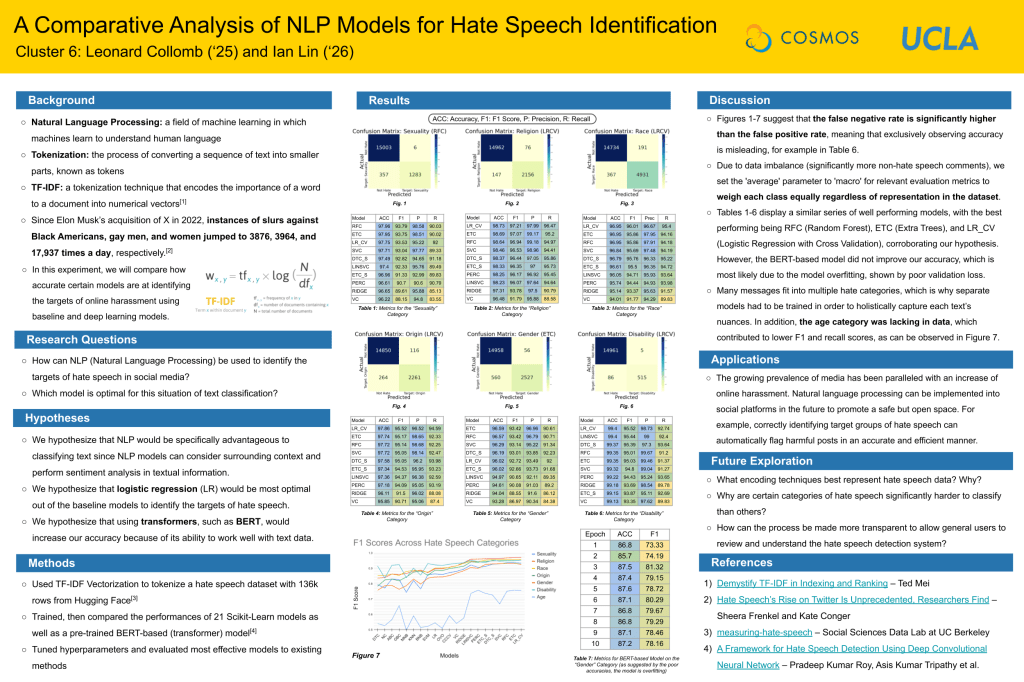
I’m excited to share the final poster from my COSMOS summer project, A Comparative Analysis of NLP Models for Hate Speech Identification. In this project, we explored how Natural Language Processing (NLP) can be applied to detect online hate speech and compared several machine learning models to determine which one is most effective for this…
-
COSMOS Cluster 6 Week 3 Recap Slides

This summer, I had the incredible opportunity to participate in the COSMOS program, specifically Cluster 6: From Medicine to Hollywood: Artificial Intelligence for Speech and Imagery. Each week was filled with hands-on projects, lectures, and collaboration with talented peers. Below, you’ll find my weekly recap slide from week 3 that highlight some of the key…
-
COSMOS Cluster 6 Week 2 Recap Slides

This summer, I had the incredible opportunity to participate in the COSMOS program, specifically Cluster 6: From Medicine to Hollywood: Artificial Intelligence for Speech and Imagery. Each week was filled with hands-on projects, lectures, and collaboration with talented peers. Below, you’ll find my weekly recap slide from week 2 that highlight some of the key…
-
COSMOS Cluster 6 Week 1 Recap Slides

This summer, I had the incredible opportunity to participate in the COSMOS program, specifically Cluster 6: From Medicine to Hollywood: Artificial Intelligence for Speech and Imagery. Each week was filled with hands-on projects, lectures, and collaboration with talented peers. Below, you’ll find my weekly recap slide from week 1 that highlight some of the key…
-
Creating a Simple Linear Regression Calculator from Scratch
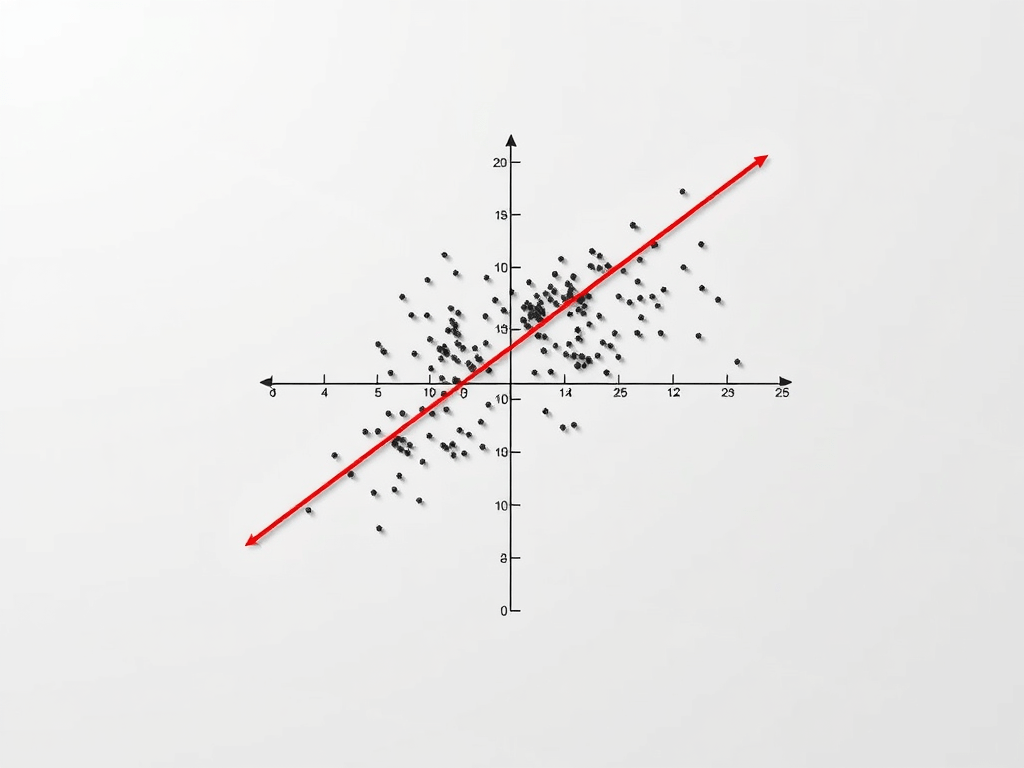
The image above was created using AI. More specifically, this was the first image generated by WordPress’ AI Image Generator, when given the prompt “Line of Best Fit Linear Regression”. Linear regression is a foundational statistical technique used to model the relationship between two variables, allowing you to predict an unknown variable of a pair…
-
[Paper] A Comparative Analysis of Text-Classification Algorithms in distinguishing between Computer and Human Generated Product Reviews
As you may have seen in my two previous blog posts, I designed and programmed an experiment that would comparatively analyze multiple text classifiers to see which one would be able distinguish between Human-generated and Computer-generated product reviews most effectively. Alongside a research mentor (a professor of math and computer science from the Georgia Institute…
-
Building a Fake Amazon Review Detector [Final]
![Building a Fake Amazon Review Detector [Final]](https://hardwiredeloquence.blog/wp-content/uploads/2023/12/image-1.png?w=768)
The image above was created using AI. More specifically, this was the first image generated by Runway, when given the prompt “Amazon Fake Review Detector”. As a quick reminder of my previous post: for my final project in my Applied AI in Python course, I wanted to address a real-world issue that is extremely prevalent…
-
Subscribe
Subscribed
Already have a WordPress.com account? Log in now.
 Hardwired Eloquence